
Adelaide AU vs. DoubleVerify Authentic Attention: Media Quality Approaches Compared

DoubleVerify built its business on verification metrics like viewability, fraud detection, and brand safety, which establish whether an impression meets baseline delivery criteria. Authentic Attention extends that foundation into attention measurement, using exposure and engagement signals to assess the conditions around an impression.
Adelaide built AU around a different question: how strong is the media opportunity? AU uses eye-tracking data alongside placement, device, and outcome data to predict a placement's likelihood of capturing attention and contributing to a business outcome.
Those design choices have practical implications. Authentic Attention adds context beyond verification, but exposure and engagement still stop short of directly establishing media quality or likely impact. AU was validated against outcomes from day one, with attention research embedded in a model designed specifically to evaluate placement-level media quality.
That distinction is also relevant as DoubleVerify prepares to become part of Nielsen. Nielsen's planned $2.15 billion acquisition of DoubleVerify will bring its verification and attention capabilities into Nielsen’s broader audience measurement and media intelligence business.
What DoubleVerify Authentic Attention Measures
DoubleVerify Authentic Attention measures two primary dimensions: exposure and engagement. The product analyzes more than 50 signals, including viewable time, share of screen, video completion, and audibility, as well as interaction signals like touches, scrolls, and audio adjustments.
How those signals are collected varies by environment. On Snap, for example, DoubleVerify combines exposure data with eye-tracking research from Lumen, while other implementations use direct impression-level platform signals.
Authentic Attention now spans display, video, CTV, and select social platforms.
DoubleVerify combines these inputs into proprietary indices, including the Attention Index, which advertisers can use to benchmark campaign performance.
Separately, DoubleVerify owns DV Scibids AI, a campaign-optimization product acquired in 2023. Scibids uses DSP and campaign data to adjust bidding toward advertiser-defined objectives.
Adelaide categorizes Authentic Attention as an exposure-and-engagement metric, distinct from a media quality metric trained on business outcomes. Exposure and engagement can help explain how an ad was presented and how people interacted with it, but they become less useful as proxies for media quality.
What Adelaide AU Measures
Adelaide created AU to answer a different question: whether a media placement creates a strong advertising opportunity. AU is a 0–100 media quality score trained and validated against real business outcomes, including brand lift, conversions, and revenue.
AU combines eye-tracking research with placement attributes, device and exposure signals, and full-funnel outcome data to predict a placement’s likelihood of attention and impact. Attention data informs the model; it is not the final output.
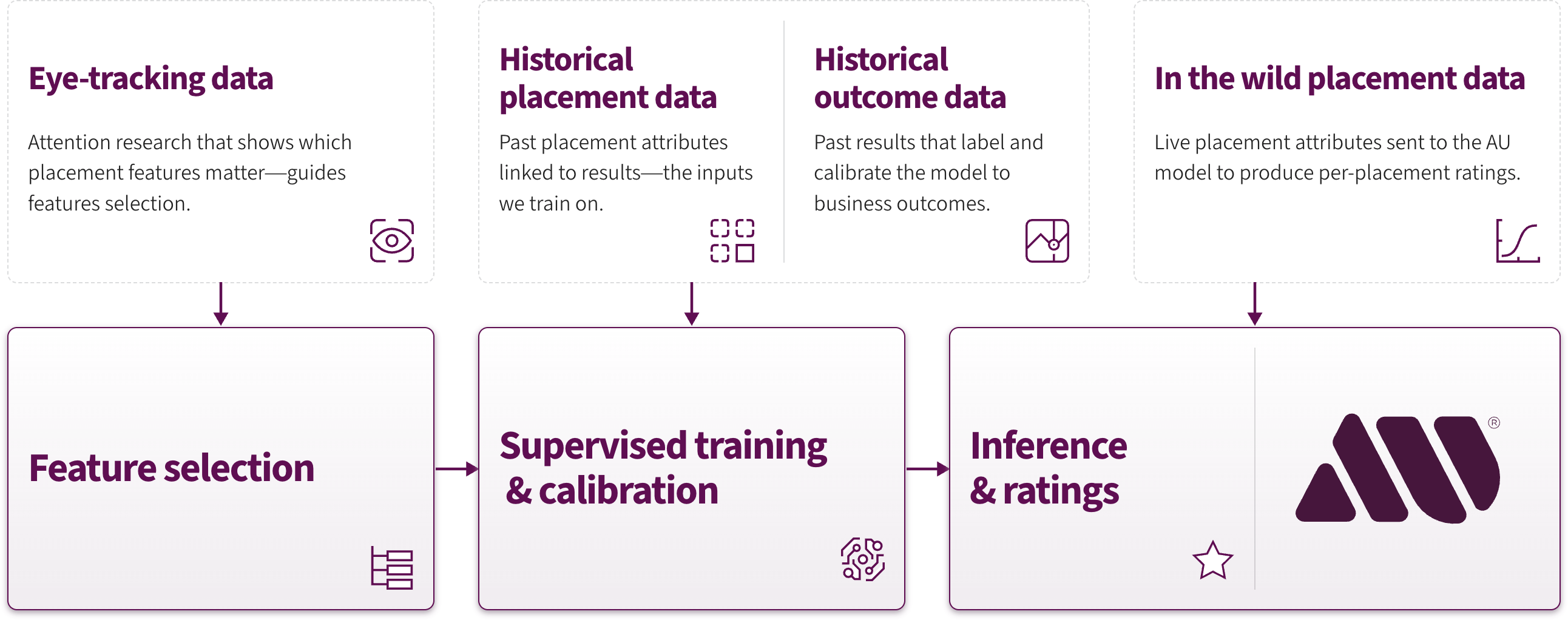
That broader input set allows AU to capture more than exposure or engagement alone, including characteristics of the media environment and the outcomes it is positioned to support. Because AU evaluates media quality at the placement level, it focuses on the quality of the media opportunity itself, without folding the performance of a specific creative or audience into the score.
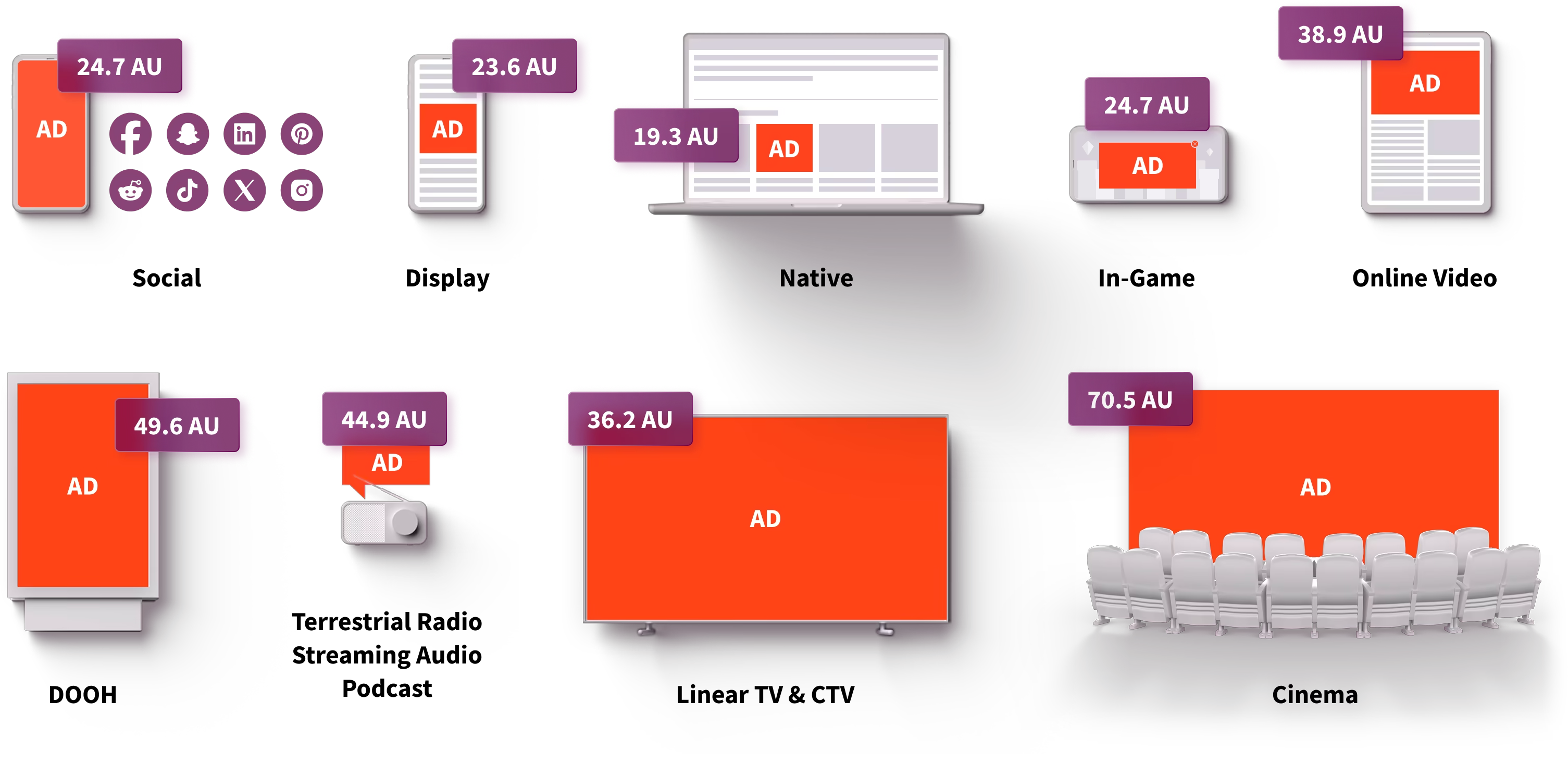
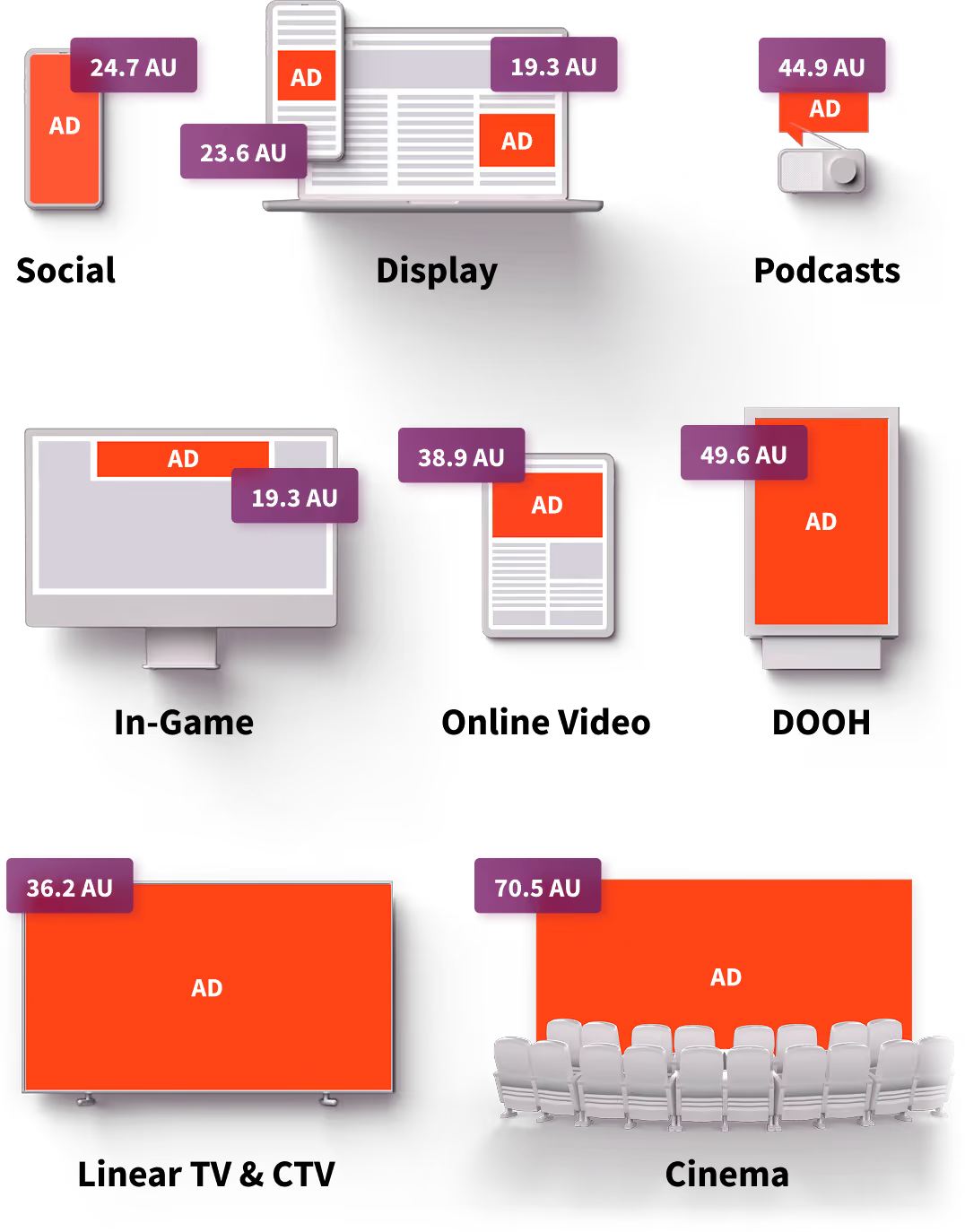
The result is one normalized 0–100 framework across all 19 channels Adelaide measures, including display, OLV, CTV, linear TV, social, DOOH, and audio.
Why Exposure and Engagement Are Limited As Proxies for Media Quality
Authentic Attention goes beyond traditional viewability, but its core inputs remain exposure and engagement signals. These measures add useful context around an impression, but they provide an incomplete read on the quality of the media placement and its likelihood of contributing to results.
Those signals are also influenced by factors beyond the media itself. A splashy, curiosity-gap headline in a native content placement can pull more clicks and engagement without the underlying placement improving. An older or more brand-aware audience tends to spend more time with an ad regardless of where it runs. Both push exposure and engagement scores up while the media itself stays the same, making it hard to tell whether optimization is finding better placements or simply audiences and creative that already engage more.
A leading beverage brand split a campaign into three otherwise consistent test cells optimized using AU, viewability, and a competing exposure-and-engagement metric, then measured brand lift across each tactic. On the web, AU-optimized media drove 3.2x greater aided awareness lift than viewability and 7.6x higher lift than the competing attention-based metric.
The case study also reflects a deeper methodological distinction. DoubleVerify builds and benchmarks its attention indices using its own exposure and engagement signals. AU, by comparison, is trained and validated against real-world outcome data from independent brand lift, sales, and measurement providers.
Independent Validation of Authentic Attention and AU
Both companies have had their measurement approaches independently reviewed, though the scope and findings differ.
DoubleVerify’s Authentic Attention is MRC-accredited for display and video measurement across desktop and mobile environments, with accreditation scoped to direct-indexed impressions only. AU is also under MRC review for accreditation, making Adelaide the first pure-play attention vendor to enter the process.
Separately, MediaSense audited AU in 2025, evaluating Adelaide’s scoring methodology and AU Curve Materiality Analysis, which helps advertisers understand how changes in AU relate to campaign outcomes. MediaSense independently reconstructed AU curves across Aided Awareness, Familiarity, Intent, and Recall and tested the relationship between AU and each KPI.
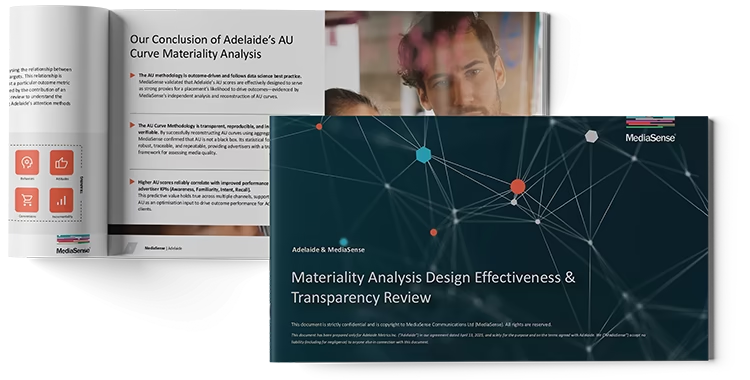
The review found statistically significant positive relationships across all four KPIs, with higher AU associated with stronger performance. MediaSense also found the methodology transparent, reproducible, and independently verifiable, while concluding that Adelaide’s modeling approach aligns with IAB and MRC recommendations and data science best practices.
Channel Coverage and Activation Capabilities
Authentic Attention is limited to the open web, CTV, and select social platforms, but its coverage does not extend across the full media plan. AU uses a normalized 0–100 media quality framework across all 19 channels, covering roughly 95% of a typical advertiser’s paid media spend, with print and search as the primary exceptions.
Beyond measurement, both companies give advertisers ways to act on their signals. DoubleVerify uses Authentic Attention data to power pre-bid Attention Segments that help buyers prioritize higher-attention inventory.
Adelaide offers several activation paths across 125+ integrations with DSPs, SSPs, publishers, and other media platforms. AU pre-bid segments can prioritize higher-quality inventory or suppress supply below a set AU floor, while high-AU PMPs give buyers direct access to inventory curated around media quality. Advertisers can also activate AU through custom bidding, where the companies’ approaches differ most.
DV Scibids AI is a standalone optimization product that connects with supported buying platforms and dynamically adjusts bidding. Adelaide develops AU-based bidding strategies and algorithms that operate within DSPs’ native custom-bidding capabilities, rather than through a separate optimization layer.
In DV360, for example, advertisers can use Adelaide’s off-the-shelf AU algorithm or build a combined algorithm that uses AU alongside Floodlight conversion optimization and other campaign signals, all within the platform’s native custom-bidding workflow. No separate Adelaide contract or IO is required. The DSP executes the bidding optimization, while AU supplies the media quality signal, allowing advertisers to optimize toward higher-quality inventory within their existing buying workflow.
The construction of exposure-and-engagement metrics matters for publishers, too. A seller can stand behind the quality of a placement it controls, but not how a brand's creative will perform with a particular audience. Once creative and audience become part of the metric, publishers have little reason to guarantee it as a transacting currency. Exposure and engagement are also measured after delivery, limiting their usefulness at the point of sale. AU addresses both issues by scoring the placement itself before the impression serves, allowing publishers to package and guarantee media quality much like viewability.
AU’s placement-level, outcome-trained design also makes it useful as an input to marketing mix models. Because it isolates media quality’s contribution to results, it can strengthen MMM accuracy without adding noise from creative and audience factors. Exposure-and-engagement scores vary with creative and audience conditions, making them less stable as an MMM input. Authentic Attention’s narrower channel coverage adds another limitation, since an MMM spanning the full media mix benefits from a quality signal that can be applied consistently across channels.
DoubleVerify vs. Adelaide Comparison
Choosing Between Adelaide AU and DoubleVerify Authentic Attention
Pick DoubleVerify Authentic Attention when the primary need is to add exposure and engagement measurement to a broader verification strategy. Authentic Attention extends DoubleVerify’s viewability, fraud, and brand-safety capabilities with signals such as viewable time, share of screen, audibility, and device interactions.
Because Authentic Attention reflects exposure and engagement, its scores can shift with creative, audience, device, and other campaign factors. A stronger score therefore doesn’t necessarily indicate a higher-quality media opportunity. Authentic Attention is also benchmarked against DoubleVerify’s attention data rather than trained directly on business outcomes.
Choose Adelaide AU when the goal is to evaluate, compare, and optimize media quality. AU combines attention research with placement, device, and outcome data to produce a comparable 0–100 media quality score across 19 channels.
For verification-led needs, DoubleVerify adds attention signals to an established stack. For cross-channel and global media quality decisions, AU provides a purpose-built, outcome-validated signal for smarter planning, buying, and optimization.
Frequently Asked Questions